We are delighted to announce the return of the Raymond Williams Society postgraduate essay competition for its 13th year. The deadline for entries is 31 January 2027.
The prize for the winning entry is £250 and a year’s subscription to the Society. The winning essay will be considered for publication in the academic journal Key Words: A Journal of Cultural Materialism (subject to peer review). The competition aims to encourage a new generation of scholars working in the tradition of cultural materialism, especially those whose research is rooted in the work of Raymond Williams.
Entries should be 5-7,000 words in length, including endnotes, which should normally be kept to a minimum. Entries must follow the Key Words Style Notes for contributors. Information about previous winning entries can be found here.
The prize is open to anyone studying for a higher degree (master’s or doctoral) in the UK or elsewhere, or who graduated no earlier than 31st January 2026.
Entries should be accompanied by a brief coversheet with the following details:
Name Postal address Email address Institutional affiliation Current or most recent programme of study Date of graduation (if applicable) Title of essay Word count
Please ask your supervisor to send us an email confirming your status. We also request that you confirm the article is not under consideration for publication elsewhere.
Inspired by Raymond Williams’s lengthy interviews with New Left Review, collected in Politics and Letters (1979), we are delighted to launch a new interview series, published on the Raymond Williams Society blog. In these interviews, we invite guests, including members of the Society and contributors to the Society’s journal Key Words: A Journal of Cultural Materialism, to reflect on their engagement with Williams’s work and the legacy of cultural materialism today. Interviews also offer guests the opportunity to promote their research, and to clarify and expand upon aspects of their work that may interest members of the Society, or which are especially prescient today.
In this first instalment, Hayley G. Toth (Secretary of the Raymond Williams Society) interviews Kate Spowage (Executive Committee member of the Raymond Williams Society and Reviews Editor of Key Words: A Journal of Cultural Materialism).
Hayley G. Toth So, Kate, can you start by introducing yourself, and telling us about your involvement with the Raymond Williams Society?
Kate Spowage Thanks for having me, Hayley. I’m a lecturer in English language at the University of Leeds. I work on the politics of language, writing and teaching about language policy and politics, postcolonial and decolonial linguistics, and, more recently, video games. I’ve been on the RWS Executive Committee since 2021, when I took over from Liane Tanguay as Reviews Editor for the Society’s journal, Key Words: A Journal of Cultural Materialism.
HT Were you already a reader of Williams’s work? Or was joining the Executive Committee of the Raymond Williams Society part of how you were introduced to Williams?
KS It was a special issue of Key Words that introduced me to Williams’s ideas and legacy. In 2016, the RWS published an issue on ‘Language and Socialism,’ edited by my PhD supervisor Tony Crowley and featuring brilliant essays by Debbie Cameron, Marnie Holborow, Jean-Jacques Lecercle and Peter Ives. That issue is still important to me – it’s a rare collection of serious socialist thinking about language. When it came out in 2016, I was at the very beginning of my PhD, and already frustrated with a dominant position in African language policy debates that often rooted itself in capitalist ideas. Lots of us seemed to be struggling with neoliberal models of language education and their aims, but finding it difficult to escape an understanding of wealth and social relations that centred GDP growth and hung its hopes for the poor on trickle-down economics. I suppose that particular issue of Key Words gave me a very different way of thinking about language problems, particularly through Peter Ives’s essay on global capitalism and global English.
In my PhD, I was looking at Rwandan language policy, partially to understand whose interests it served, and whose interests it failed to serve. And partially I was trying to understand how English has acquired the status of a ‘global language’, because I was dissatisfied with what I would now call, following Selma Sonntag (2009), a cosmopolitan model of English. Since the term ‘global English’ was popularised in the 1990s, the dominant explanation for the rise of English has been cosmopolitan, especially in commonsense discourse. Basically, it holds that English has become a global language because the world’s citizens have chosen to learn it and to speak it. And those decisions are understood to be made freely, by global citizens who have the time, money, and inclination to learn and use English. It overlooks the fact that, globally, most people do not, and might never, speak English. It also underestimates the significance of political power in supporting global English.
So my introduction to Williams’s work began there, and it’s since become clearer to me how woefully underexplored language is in relation to socialism and non-capitalist worldmaking. After that issue, I read Williams. I devoured fragments of Keywords: A Vocabulary of Culture and Society (1976), but I didn’t really get it for a while. I feel like it took me a couple of years to get a handle on what the whole Keywords project was about. And really, I had to teach it – and teach it for one semester with a pretty shaky understanding! – before I made sense of Keywords. But it was particularly Marxism and Literature (1977) and Problems in Materialism and Culture: Selected Essays (1980) that were really generative for my research, in terms of thinking in more nuanced ways about ideology and culture, and how we might treat them not as reflections of political and economic processes, but as forces that have agential power in their own right. The PhD project became my book, Language as Statecraft(2024), arguing that we need to take the cultural side and the material side of sociolinguistic life seriously and investigate their interrelations. We haven’t done very much of that in sociolinguistics or applied linguistics – at least not yet.
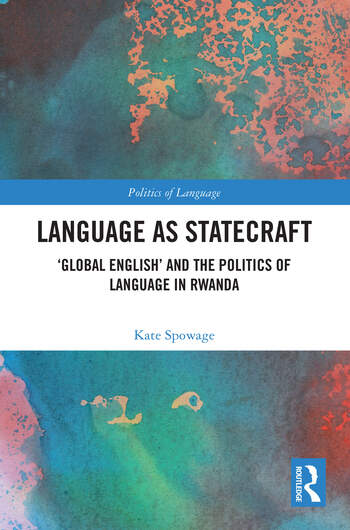
Language as Statecraft: ‘Global English’ and the Politics of Language in Rwanda (Routledge, 2024)
HT You mention your book Language as Statecraft: ‘Global English’ and the Politics of Language in Rwanda (2024). One of the things you’re describing about your work is its tendency to interrogate or undercut an existing scholarly consensus or scholarly trend that takes capitalism for granted, and doesn’t deal with capitalism critically. But, in fact, one of the interesting things about Language as Statecraft is that it’s not only a critical account of capitalism and its relationship to the question of the spread of English around the world. It’s also an account that centres the role of the state. Your book opens by insisting that “the state is or should be a central concept for interrogating the politics of language.” It’s a simple claim. And we’ve talked a bit about what it means to look at capitalism critically. But I wonder: could you tell us what it means to you to foreground the state in that way, and to think about the state critically in these debates?
KS You’re right – I’m often trying to figure out where capitalism fits into the knowledge we have. To get why I make that point about the state, you have to understand that in my broader field, we often take for granted certain ideas about human agency. There is an almost compulsive emphasis on agency in linguistics. My work essentially argued that teaching through English shored up class reproduction, and when presenting it I would be asked, like clockwork, where the space was for agency. It was as though the project I should have done would identify moments and spaces of agency for dispossessed learners – working-class students for example. And there was a sense that agency should be the crown or cornerstone of the story I was trying to tell.
It was very generative to have those conversations, and they really shaped the conclusion to the book. I don’t want to dismiss the questions, or make it sound like linguists or intellectuals should ignore agency. My position is really the opposite – we need to think about it, but critically. I struggled to answer those questions for years, because I was like “well, yes, we do have agency.” I know that. The very fact that I’m able to comment critically on capitalism is evidence that I have agency. And, if I do, everybody else does, right? But the more pressing story that emerged from my research was about the ways that agency was constrained. It was a story about structure, in that classical sense of structure as the forces that constrain agency and influence people’s actions in ways they don’t necessarily have control over. The state is crucial to understand, because it’s one of the major powers that influences the specific structures that we navigate.
Now in the debates on global English and language policy, like in other areas of formal politics, some argue that the state isn’t as influential or important as it once was. Globalisation is figured as a process that neutered the state, with corporations becoming far more powerful than the state ever was. I think that that’s a misunderstanding. I think it’s really important, whether you’re trying to analyse power or thinking about how to enact practical change, to recognise that even if it doesn’t action it, doesn’t use it, the state does have power. It could curtail the routine tax evasion of mutinational corporations. It does legislate language in different ways that serve specific social interests, including its own. The state also retains the monopoly on legitimate violence and punishment. But its actions are not totally unconstrained either – for example, the state manages and responds to struggles between domestic political factions. In contexts readers of this blog are likely to be familiar with – the US and UK – the state responds to the interests of the major parties, their donors, and lobbyists. Those complex considerations were often underexplored in conversations about language policies in Africa, which tended to focus on notions like development and globalisation. And so, it seemed to me that working with the state allowed a fuller and I think more realistic understanding of where speakers can and cannot exercise agency.
Centring the state also allowed me to think about the agendas and interests served by language policies that we have tended to think about as failingspeakers. The discourse in applied linguistics can tend towards a style of analysis where we talk about language policies that are broken or failing. We might even take policies as evidence that planners don’t realise that teaching through English is detrimental to students who have no access to the language at home or through private tuition. And that’s too charitable, I think. We have to bring the state into the picture and analyse it, partially from the perspective of political history. We need to ask, actually, who controls the state? How do they gain control of it? Who do they struggle with for control? These questions bring up different answers to the language policy question – suddenly it doesn’t look like teaching through English is some kind of broken policy or failure of the state, it looks like it’s doing precisely the job of sorting the population. EMI policies ensure that most people do not get a full education, so they have to go into the kind of raw material extraction that is important in Rwanda and many other African countries, while the few who do access education are distinguished (in Bourdieu’s 1977 sense), and include the people who become part of the state machinery.
HT And what would you say to those who might say that sounds like a particularly prescriptive view of the state, wherein the state has the power to prescribe and proscribe, and performs this kind of linguistic management deliberately? I suppose I’m thinking, based on your discussion of capitalism, about how the state has other interests – like capitalism, for instance – and about how linguistic management and the politics of English can to some extent be a byproduct or an effect of, say, trying to make super-exploitation work. From that perspective, making Kinyarwanda speakers struggle to learn English is not necessarily the state’s goal, but more of a necessary process through which it guarantees that the majority of Rwandans go into menial and manual work, or subsistence farming. As a kind of counterpoint to a vision of the state as a deliberate actor, I imagine there will also be people out there, not least in Britain, who would say the state doesn’t know what it’s doing half the time, let alone is this kind of wilful and deliberate actor that always knows exactly the objects of its attention and the implications of its policymaking.
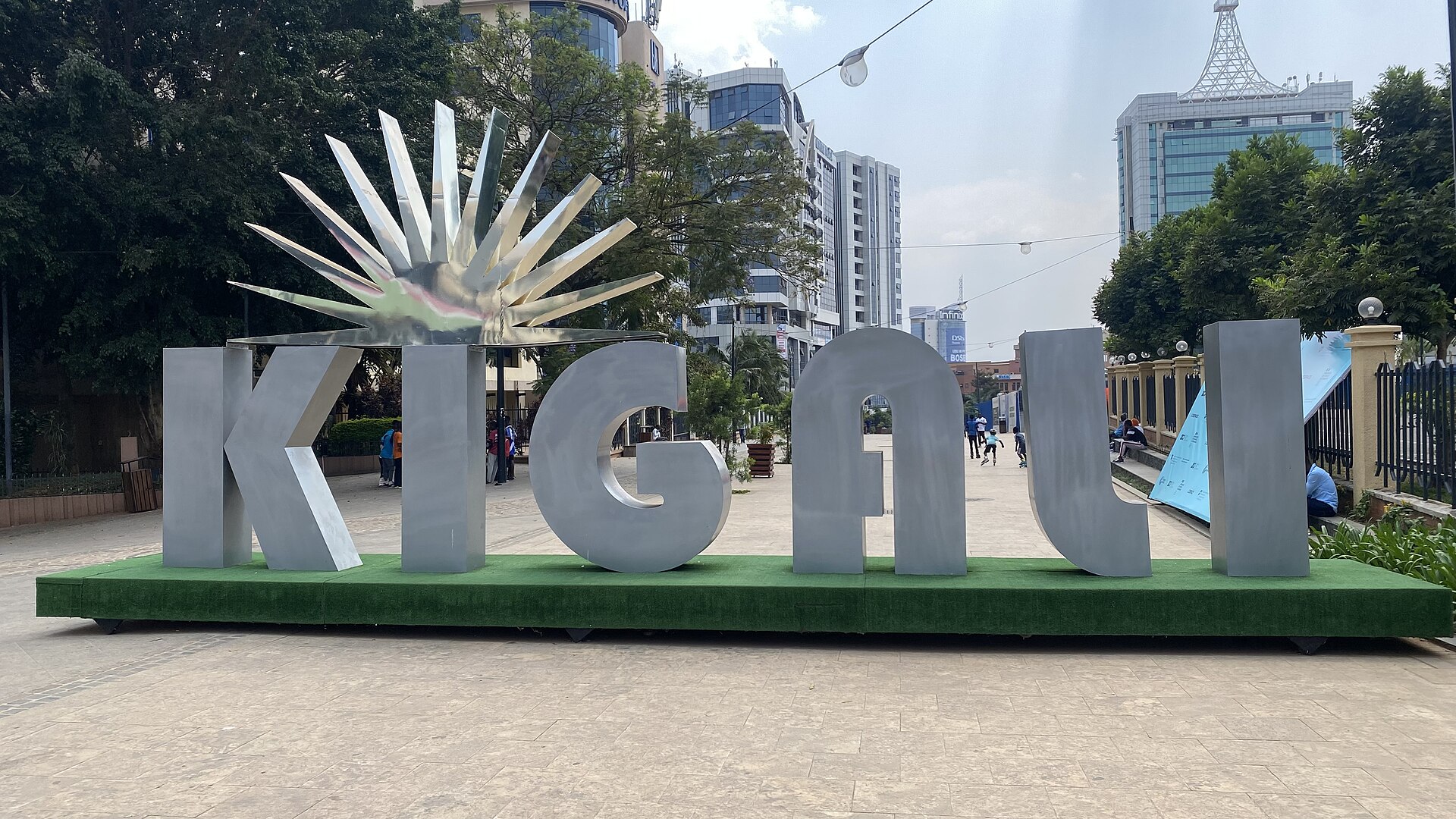
Kigali sculpture in Kigali, Rwanda
KS That question of ‘deliberateness’ is a really slippery one. I am actually quite careful in the book not to make too many assumptions about what is deliberate and what is not. ‘Trial and error’ is, to me, the best model for understanding why language policies that mandate formerly imperial languages are so prevalent globally. And they really are – most postcolonial countries require that state-supported education be taught through English, French, Spanish, or Portuguese. It begins with the radical break of colonisation. Colonisers needed translators and functionaries to enable them to intervene in the lives of the people. Local people were educated in imperial languages, and performed duties that were essential to the colonial state, including overseeing workers who didn’t speak imperial languages. In several ways these educated people, who were at least bilingual, helped to justify the colonial regime. In Rwanda, for example, the Belgian administration worked hard to gain the support of the monarchy and the aristocracy, which were its primary antagonists in the 1910s and early 1920s. They incorporated both groups by founding the education system and offering French and state jobs to those who enrolled. Then this kind of symbiotic hegemony emerged, which served Belgian and élite interests, and the two collaborated in the new system. Obviously, Belgium dominated, as did Whiteness, and this hegemony was strained by tensions that would ultimately feed into the liberationist politics of the 1950s. But when a language is taught to a very small number of people in this way, and a capitalist society allocates certain kinds of work to Francophones, one of the consequences is that people are simultaneously shut out from the language and from work opportunities for the formally educated. In Rwanda, the excluded became coffee farmers more than anything else. Trial and error produced benefits for the political class – Presidents Kayibanda and Habyarimana, particularly, profited from the coffee economy and secured power on the back of its success.
There’s also a wider ideological importance to the whole dynamic. English or French or another colonial language becomes seen as a language of the learned, a language of intellect, a language of the dominant class. The élite status of these colonial languages in turn creates the conditions for very pervasive myths that these are languages that are superior because of some internal quality. These myths are promoted by colonisers, but also linguists and others who write and philosophise about language throughout the colonial project. So if any of these discursive or governmental practices become deliberate, I think they become deliberate because they turn out to benefit the state and the reproduction of capitalism. They reproduce the social formations that these states require by stratifying workers in sociolinguistic terms – by building a kind of sociolinguistic structure that also, of course, reflects class-bound sociolinguistic structures that already prevailed across Europe.
HT You conclude the book by telling the story of Ngũgĩ wa Thiong’o’s 1976 collaboration with Ngũgĩ wa Mirii and the Kamiriithu Community Education and Cultural Centre to produce a play that both of us know quite well, Ngaahika Ndeenda (I Will Marry When I Want), first performed in 1977. It was this play that reportedly led to Ngũgĩ’s arrest and detention without trial in December 1977. Nonetheless, the decision to write the play in Gikũyũ, you suggest, alongside the play’s thematic concern with organised resistance, offers what you call a “working vision of resistance”. You write:
Kamĩrĩĩthũ does not give us an answer, or a blueprint for resistance. Rather, it offers one working vision of resistance that is empowered by decisions around language use, counters established patterns of language use, and takes aim at the structures that generate class-based exploitation, with sociolinguistic implications. It shared some features with projects that aim to foster local language literacy and cultural production, which are undoubtedly important in their own right. But it was also overtly politicised and critical, and as such the use of Gĩkũyũ became critical to the creation of a more organised form of resistance. The plays themselves critique the status quo upheld by the Kenyatta government. The praxis behind the production led to connections between participants from different social groups, who together developed an analysis of the problems facing Kenyan people. It led to the elaboration of alternatives in theatrical and linguistic practice, both of which were bound up with issues of social power. As such, it could be seen as part of the creation of a new historic bloc, in opposition to Kenyan neo-colonialism (as Ngũgĩ sees it) and the social dynamics it preserves, including the suppression of art and collaboration in local languages (see Ngũgĩ 1981; 1986; 1998). There was a clear ideological function to the work, in the sense that it had the potential to change minds on matters of linguistic and political practice. (Spowage 2024, 176–77)
I found this a really perceptive account of the play, but also a quite surprising one in the context of the book, which is so concerned with materialising language or with recontextualising language by way of material life and interests. Language as Statecraft, as we’ve discussed, links something (language) that has been presumed to be cultural – and even individual – back with political economy. In that way, it interested me that the book turns in the conclusion to cultural resistance – to cultural production as a site of resistance. I wonder if you could elaborate on how you see the role of culture in relation to political change or language policy specifically?
KS Ngũgĩ’s project at Kamĩrĩĩthũ is really quite special and probably understudied, certainly in applied linguistics and sociolinguistics. I ended up closing the book with it because I re-read Decolonising the Mind: the Politics of Language in African Literature (1986) while I was finishing my book. I realised something I hadn’t before: that the whole of Decolonising the Mind really turns on the chapter about Kamĩrĩĩthũ and the language of African theatre. Ngũgĩ’s argument, in brief, is that literature produced in colonial languages can’t be accessed by the African working classes and peasants (to use his terms and categories). So Europhone literature can’t be the foundation of a national literature or imaginary, which is one of the issues Ngũgĩ explores. Attempts to build a national culture are frustrated by European languages, but they’re also frustrated by written language because in a lot of African societies the literacy required to read a novel, say, is not universal, and it patterns with factors like gender, urbanity, and especially class. Theatre in local languages is much more accessible – it’s not exclusionary from the outset.
So after being sort of cajoled by this woman who knocks on his door every weekend, Ngũgĩ basically gives in to her request and starts working with a group of people at the Kamĩrĩĩthũ Cultural Centre. He’s at pains to talk about their different class positions – some are unemployed, others are manual labourers, teachers, or businessmen, and they’re all working together. It’s a cross-class collaboration. And there’s something really important, I think, in the fact that this process brings together people from different classes who are usually very remote from each other. The usual business of capitalism is to atomise them, right? It’s to spatially and socially separate them. It’s to put them in different neighbourhoods with different levels of wealth, different kinds of housing and infrastructures. But it’s also, in a society like Rwanda, or like Kenya, to linguistically separate them: to endow one class, broadly speaking, with an imperial language, and to allow knowledge of that language to diminish as you move down the class ladder. So Ngũgĩ talks about Gikũyu as a medium that connects these different classes in the practice of collaborative production. It’s as a result of those two things, I think – the cross-class collaboration and the use of Gikũyũ that enables it – that they arrive at an analysis of Kenyan neo-colonialism (Ngũgĩ’s term), which includes Kenyan capitalism, and ultimately produce a play that is very critical of these political economic forms.
The reason that Kamĩrĩĩthũ really speaks to me is partially because of the shared language aspect of the project. But, for me, it’s really about what that enables, and the fact that, when those class barriers are kind of displaced for the process of producing the play, it produces an allied middle class, working class and peasant class that are all identifying the same problems with Kenyan society, i.e. the fundamental structural problems of capitalism.
The content of Ngahika Ndeenda is performed in Gikũyũ, and also uses dance and song and other cultural forms that are relevant and recognisable to the play’s audiences. Because of all of that, it’s able to become something that is not just superficially ‘of the people,’ but also aiming to be artistically and politically ‘of the people’ in challenging things that marginalise them. So that’s really what I think the power of the Kamĩrĩĩthũ is. As Williams would have it, the play demonstrates the power of culture to shape the material. Culture is one very accessible area where resistance might begin, because anybody who has the time can get together and produce a play of that kind. And that’s really what is shown by the Kamĩrĩĩthũ experiment.
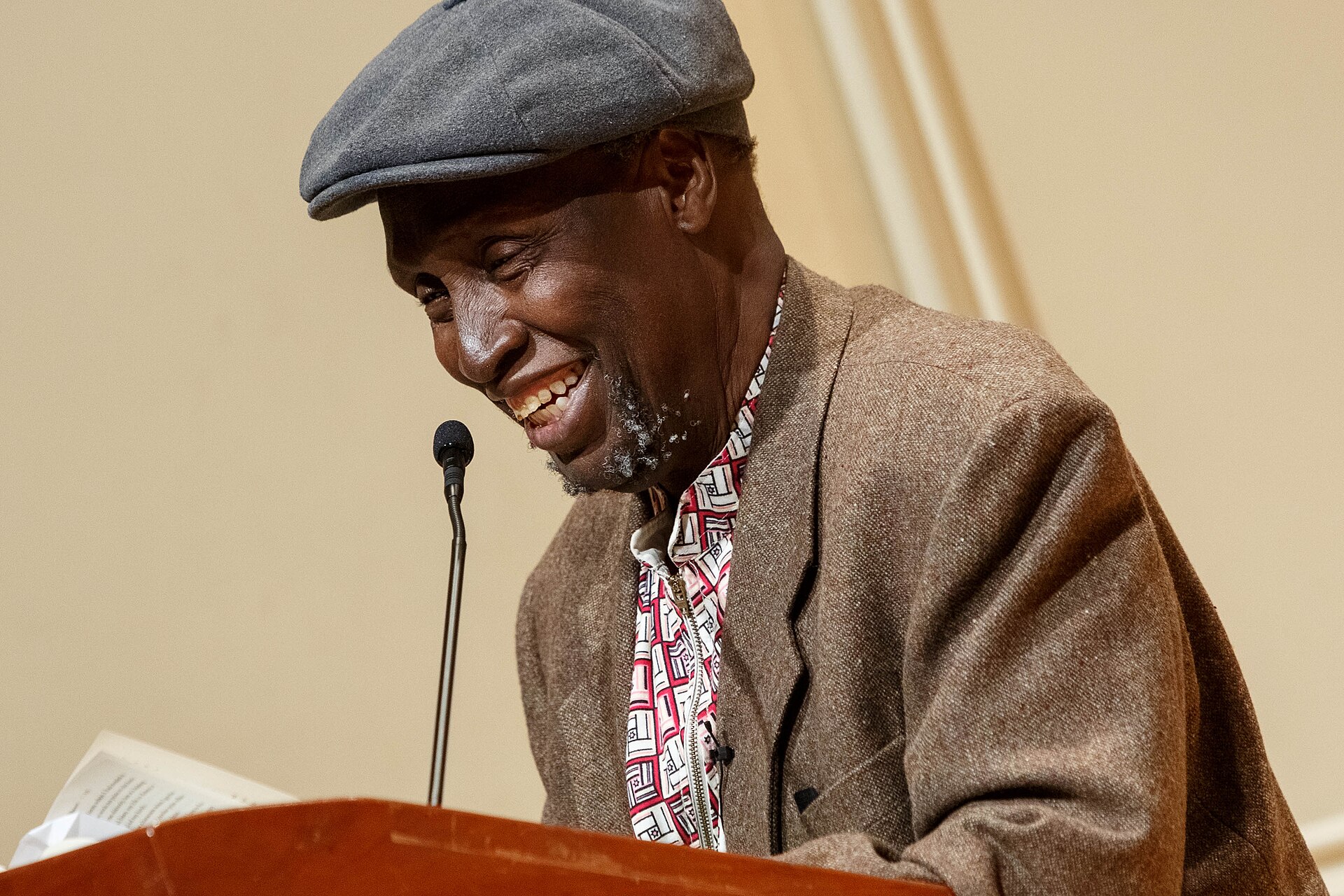
The late Ngũgĩ wa Thiong’o reads excerpts from his work in both Gikuyu and English during a presentation in the Coolidge Auditorium, Library of Congress, May 9, 2019
HT I think you know how I feel about Kamĩrĩĩthũ. And the account presented in the book is exciting and offers a different take on Ngũgĩ wa Thiong’o and Ngũgĩ wa Mirii’s project with Kamĩrĩĩthũ Community Education and Cultural Centre. Its political power lies precisely in how its production process is a kind of concrete refraction of material concerns. This is a collaborative play, but it’s also, like you say, a cross-class collaboration. It’s not just about the thematisation of what’s going on in Kenya, but how it’s produced. It’s about process. I could ask you more about this, but, thinking about the role of culture, I want to move on to talk about your recent work on other cultural media, including video games. In 2025, you published an article with Language in Society about Civilization, a popular series of turn-based strategy games in which players attempt to explore, conquer and colonise territory. You’re also in the late stages of co-editing a special collection for the Open Library of Humanities Journal focused on The Last of Us, which readers might be aware is a post-apocalyptic action-adventure game, since adapted by HBO for television. Why do you think video games in particular merit critical attention? What do they reveal about the politics of language?
KS I think the first thing to say about video games is that they’re big business. That is what really drew me to them in the first place. Grand Theft Auto 5 was the highest-grossing media product of all time. We still have this sense that video games are trivial, but they are culturally and materially important parts of late capitalist production and ideology.
Players have collectively spent one billion hours on Civilization V – that’s an incredible amount of time. The average Civilization VI player, as I say in the article, has spent 366 hours on the game. If you think about traditional objects of ideology critique – films or novels, for instance – people just don’t spend the same amount of time with them. We can and should talk about Marvel films as ideology, for example. But, even if you watch them all twice, it would take less than 150 hours – and it’s not interactive in the same way as a game. Video games are hugely important in ideological terms, because of how popular they are. I have no stakes in the distinction between high culture and low culture, but I think that the perception of video games as low culture is one of the reasons that they haven’t been paid as much attention to as they deserve.
So when I started writing about Civilization, I was ready to write a piece that was about a game that tends to reproduce Eurocentric narratives, and colonialist narratives, and is riddled with these sorts of problems. This is how Civilization has tended to be treated in postcolonial studies. What I ended up writing was in fact very different, and was inspired by your work, Hayley, on reading and reception. What I found was that if you look at how people play the game, you see something that is a lot more like Kamĩrĩĩthũ. Process becomes really important. Civilization does, as I outline in the piece, embed various unhelpful fictions about language, including the idea that colonialism had no impact on language matters – meaning that there is no sociolinguistic question of colonialism. However, in their fan communities, players of Civilization essentially talk about linguistic issues, even some that sociolinguists rarely consider, like toponymy – placenames. They speculate on the reasons that colonial powers might rename places, as indeed many of them did, and draw out the political significance and importance of toponymic changes. So for me, looking at video games has become about seeing where people might be nurturing criticality and sociolinguistic or political awareness, using popular media. I also think video games and their popular audiences could potentially provide leads for thinking about areas of sociolinguistic life which are undertheorised or not fully understood, but which belong at the heart of a sociolinguistic or applied linguistic project, such as power, colonialism, and the politics of language.
HT In the article, you talk about players of Civilization as vernacular theorists of language. It was a framing I really enjoyed, in part because of my own work on non-professional readers as interesting and interested readers of postcolonial literature. What does it mean to think about gamers and other non-experts as theorists?
KS The reason I talk about players as vernacular theorists is that I didn’t want to talk about them as people who just have opinions about language. I didn’t want to use the vocabulary of folk linguistics or language ideologies, both of which presume that there is some kind of definite reality when it comes to language, which is not being captured by people who aren’t trained as professionals. ‘Language ideology’ is the usual term for this sort of thing, but it suggests to me both a kind of non-rational belief that might be based in emotion, presumption, or prejudice, and something that is non-reflexive, that people don’t probe or rethink in line with the world they encounter. But the whole argument of vernacular theory is that all of us theorise, all of the time. We theorise when we try and make sense of the world. And our theorising, which we usually just call thinking, often rubs against the ideological structures that encourage us to think about things in ways that serve dominant interests. That was part of what was so compelling about Civilization. Many of the ideological premises that were coded into the game were rejected by vernacular theorists, or were complicated by them, or attenuated by them. Whatever players were doing, they weren’t swallowing them whole. I couldn’t find the concept of vernacular theory in use in any other sociolinguistic research, so I hope that the article opens up a different way of engaging with people’s ideas about language.
An important part of it is that, with these players, discussions about language aren’t about moving towards professionalism. They’re about doing something different that is, in some ways, parallel, or adjacent, that involves exploring and highlighting questions that have tended to be marginal in professional linguistics. For me it’s really compelling that these vernacular theories don’t derive authority or a line of questioning from the professional view of language. And it can be the case, as I show with Civ, that players have misconceptions about language, but they usually have them from very progressive places where we might quibble with the linguistic or historical detail, but their politics might be something that we agree with. I highlight and try to draw out some of those complexities, where players either get things wrong or make claims that don’t fit our models – those are two different things of course. The point of calling them vernacular theorists isn’t to edify them and say, you know, this is incredible, exceptional, like unbelievable talk that we’re overlooking. It’s not to be voyeuristic in that way. It’s instead to recognise that this is thinking in action. It has blindspots, just like scholarly work, but it offers an alternative discourse on language that is certainly worth bringing to the attention of professionals, and which may take us in different critical directions.
HT That’s right, I think – that everyday cultural practices are critical and sophisticated, and should interest us, especially where they seem to gain perspective from exceeding or flouting the conventions and protocols of professional judgment. We could talk about this more, I’m sure, but it raises a question for me about the responsibilities of scholarship. Can we wrap up this interview by discussing how you see your role as a scholar and academic?
KS In Politics and Letters: Interviews with New Left Review (1979), which collates all the fantastic interviews Williams did with New Left Review, Williams said something that really resonated for me. He was asked about The Country and the City (1973), and made the point that we need to think about whose side our work is on – whose interests it serves. It’s only a small comment from Williams, and he doesn’t reflect on it in any great detail or anything. But it recalls for me contributions that several scholars have made about the responsibilities that come with what we do, from Edward Said on amateurism, to Noam Chomsky on intellectual responsibility, and Antonio Gramsci on organic intellectualism.
Williams’s question is vital – whose interests does this work serve? We shouldn’t comfort ourselves that our work is outside of social struggles. The question of interests calls on us to try to do good with the work that we do. To start from a perspective that is endorsed by transnational capital, for example, might preclude us from serving the interests of the world’s most exploited people. You need to work through those tensions and figure out what they mean for you. I’ve thought a lot about how to deal responsibly with the questions that impact the lives of the global poor and, more recently, the practices of popular audiences, who are easily imagined as duped by capitalism or exoticist. Obviously, these problems are at very different scales. But they beg the same questions, really: if your work were to change the world, even in a small way, who would be better off for it?
_____________________________________________
Language as Statecraft: ‘Global English’ and the Politics of Language in Rwanda is reviewed in Key Words 23, out Autumn/Winter 2026.
We are delighted to announce the winner of the 2026 Simon Dentith Memorial Prize, the Society’s postgraduate essay competition.
Amy Todd’s essay, ‘A Red Rag to a Bull: Red Rag magazine, Socialist Feminism, and the Communist Party of Great Britain,’ draws from her exciting PhD research on the British ‘magazine of liberation’ Red Rag (1972-1980). The essay beautifully reconstructs the sometimes strained relationships between the journal’s editorial collective, the British Communist Party and the wider trade union movement, as it looked for ways to criticise the labour movement while staying very much a part of it. Richly versed in the relevant archives, attentive to questions of form and institutional structure, the essay advances our understanding of this pivotal moment in the articulation of a Marxist feminism that empowers and unifies diverse and fragmentary experiences of oppression.
We are thrilled that Amy has agreed to revise the article for publication in Key Words. She wins a cash prize of £250 and a year’s subscription to the Society.
Next year’s competition will go live in September 2026. Stay tuned!
We’re excited to promote the publication of a new special issue on Raymond Williams, published in the International Journal of Welsh Writing in English (IJWWE).
Published in April 2026, and edited by Daniel G. Williams (Swansea), the issue testifies to the abiding relevance of Williams’s work. You can access the special in full via the following link: https://ijwwe.uwp.co.uk/issue/1940/info/
TheInternational Journal of Welsh Writing in English is the premier journal for current research on Welsh literature in the English language, Welsh drama and performance in English, translation, cultural studies and related areas.
Please join us in London on 27 May 2026 for this year’s Raymond Williams Society Annual Lecture, to be delivered by Professor Mark Steven (University of Exeter).
Mark’s lecture, ‘24 Revolutions Per Second’, will take its lead from Raymond Williams’s writings on film, and will consider the relationships between cinema and revolution twentieth century and into the present.
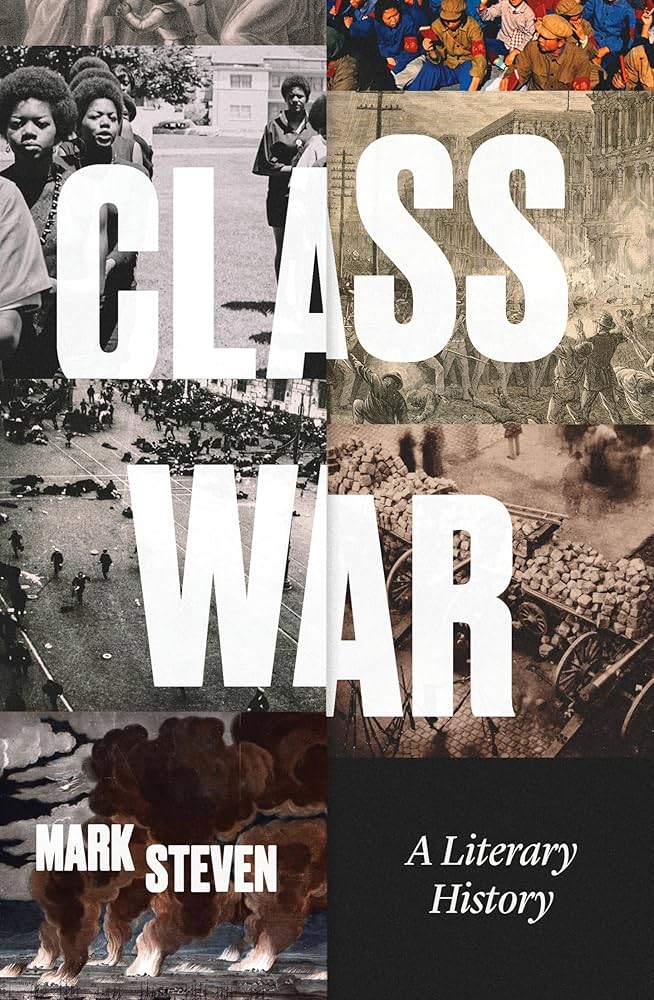
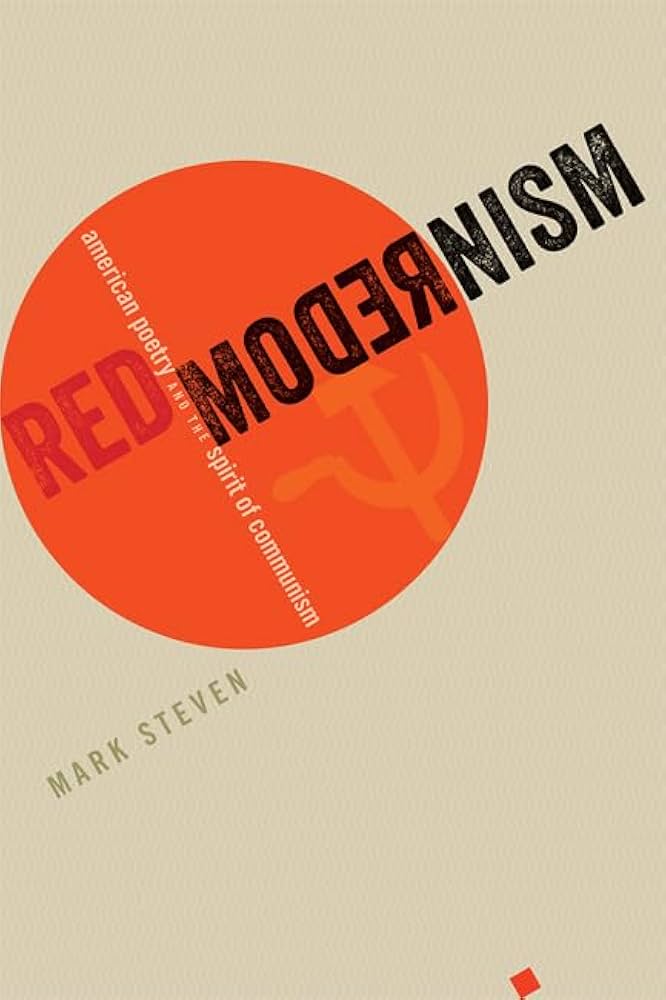
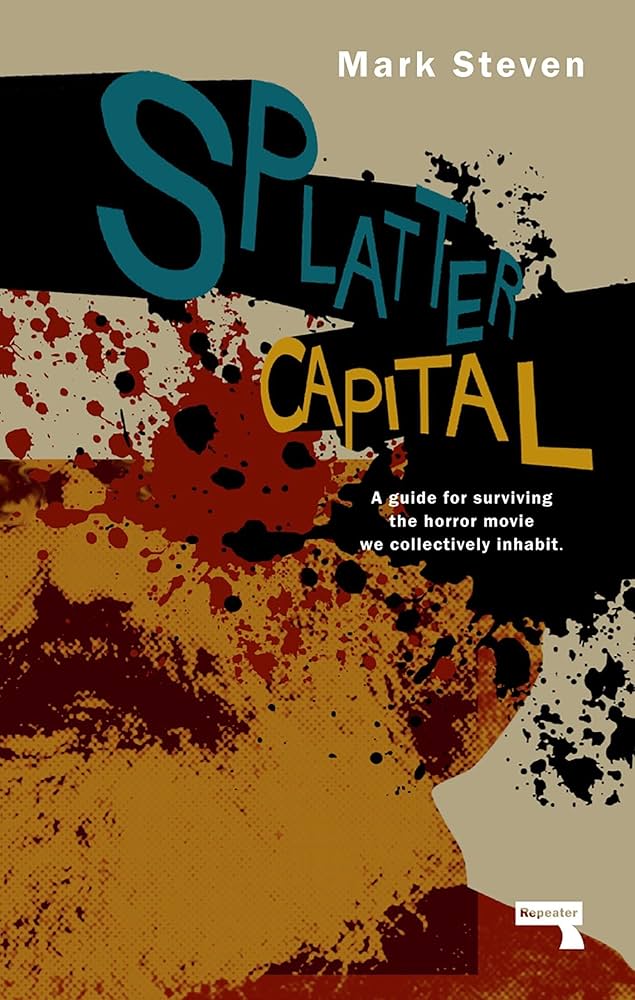
Mark Steven is Associate Professor of Literature and Film at the University of Exeter. He is the author of Red Modernism: American Poetry and the Spirit of Communism (Johns Hopkins UP, 2017), Splatter Capital (Repeater, 2017), and Class War: A Literary History (Verso, 2023). He is also editor of Understanding Marx: Understanding Modernism (2021), co-editor of the collections The Cinema of Theo Angelopoulos (2015) and Styles of Extinction: Cormac McCarthy’s The Road (2012), as well as the author of numerous articles in journals including Post45, Commune, Modernism/modernity, Textual Practice, Film-Philosophy and Screen.
Date and time: Wednesday 27 May, 16:00-18:00
Venue: Fyvie Hall, University of Westminster, 309 Regent Street, London, W1B 2HW (map)
We’re pleased to share details of an upcoming seminar series that may interest our readers and members.
The Manchester Metropolitan University (MMU) Human Sciences Seminar Series for 2026, Philosophies of Resistance, will explore the philosophical thought that has resisted colonial, racial and carceral oppression. The 2026 series aims is to question the role that philosophical ideas have played – and continue to play – in collective struggles for social justice, and human emancipation more broadly.
The three seminars in this series are:
Frantz Fanon & Stand Up to Racism, Wed 25 March 2026
Philosophy in Prisons, Sat 25 April 2026
Human Rights & Resistance, Wed 27 May 2026
Each seminar includes an academic talk followed by an ‘in-conversation’ discussion between the speaker(s) and a local political activist, and questions from the audience.
The MMU Human Sciences Seminar Series is an invited speaker and research seminar organised by the Philosophy section of MMU’s Department of History, Politics and Philosophy. The series, which has run for over forty years, was founded by Philosopher David Melling and Professor Wolfe Mays in 1979. It was created out of a desire to explore the various human sciences in a systematic way from the standpoint of critical philosophy. You can also find out more about the Human Sciences Seminar by visiting the following website: Home | Human Sciences Seminar Series.
We are delighted to announce the return of the Raymond Williams Society postgraduate essay competition for its 12th year. The deadline for entries is Friday 3 April 2026.
The prize for the winning entry is £250 and a year’s subscription to the Society. The winning essay will be considered for publication in the academic journal Key Words: A Journal of Cultural Materialism (subject to peer review). The competition aims to encourage a new generation of scholars working in the tradition of cultural materialism, especially those whose research is rooted in the work of Raymond Williams.
Entries should be 5-7,000 words in length, including endnotes, which should normally be kept to a minimum. Entries must follow the Key Words Style Notes for contributors. Information about previous winning entries can be found here.
The prize is open to anyone studying for a higher degree (master’s or doctoral) in the UK or elsewhere, or who graduated no earlier than 31st January 2025.
Entries should be accompanied by a brief coversheet with the following details:
Name Postal address Email address Institutional affiliation Current or most recent programme of study Date of graduation (if applicable) Title of essay Word count
Please ask your supervisor to send us an email confirming your status. We also request that you confirm the article is not under consideration for publication elsewhere.
Speaking in 1980 amid the New Right upsurge, Raymond Williams noted that ‘cultural struggle is absolutely crucial, because this is the terrain on which the interpretation of the crisis had to be established for all the other practical consequences to follow’. This Special Issue of Key Words: A Journal of Cultural Materialism, to appear in autumn 2027, will consider what resources Williams’s thinking, and the cultural materialist tradition more broadly, might offer for the interpretation and contestation of political reaction, both in its current forms and its past manifestations. Under today’s intensifying conditions of authoritarianism, exemplified by the increasingly grotesque spectacle of the second Trump administration, and undergirded by economic malaise, climate breakdown, resource depletion and sharpening inequality, there is an urgent need for materialist attention to the cultural mediations of these crises, as well as for analyses of cultural formations of anti-fascist resistance and contestation both past and present.
Raymond Williams wrote little that directly addressed the politics of fascism, despite his personal experience of anti-fascist combat, and where he did so his thinking generally echoed the dominant Marxist positions of the interwar period. In Modern Tragedy and ‘The Politics of the Avant-Garde’, for example, fascism is treated as a failed or parodic version of a genuine popular and revolutionary politics, a position which, as Alberto Toscano has argued in Late Fascism (2022), may struggle to account for the distinctive forms of individualism, accumulation, technocracy and subjugation that interplay in post-neoliberal variants of radical right-wing politics. And yet, we suggest, there is also much in Williams’s writing that might implicitly or indirectly address itself to contemporary problems of right-wing hegemony, and to the complex problem of what Stuart Hall termed ‘authoritarian populism’, towards which, Williams argued, the left must not be merely defensive or defeatist (‘Problems of the Coming Period’, 1983). His engagements with communications, technology and the media, for example, beginning in 1962 with Communications and running through to late essays such as ‘Culture and Technology’ (1983), may speak to the current conditions of platform capitalism in which ownership and control of the means of communication is not only a key site of political contestation, but an existential problem for the future of democracy. The investigation of changing and competing senses of ‘culture’, perhaps the best-known theme in Williams’s body of work, appears similarly salient, and offers much that might be available to critical analyses of the reactionary discourse of the “culture wars”, which constructs social and cultural antagonisms along ethnonationalist, homophobic, misogynistic, and transphobic axes. Likewise, Williams’s sustained exploration of the function of cultural and educational institutions, and the necessity of their democratisation, pursued from TheLong Revolution to the late essays collected in What I Came to Say, might be read in relation to current assaults – often justified by reference to the conspiratorial figure of ‘Cultural Marxism’ – on universities and other liberal institutions. Finally, challenging fascism and the far right in the present require an understanding of historical struggles and the radical and subcultural formations that sustained them. Williams’ conceptual interventions, such as the ‘structure of feeling’ (first elaborated in Preface to Film) and the interplay of dominant, residual and emergent forces (Marxism and Literature), might offer tools to productively interpret historical formations and modes of anti-fascist and anti-authoritarian resistance. This special issue invites contributions that engage with these or other aspects of Williams’s thought and methods.
We are looking for essays of 7-8,000 words from scholars working within fields that may include, but are not restricted to, literary studies, history, communications, cultural studies, and critical theory. Topics may include, but are not limited to:
Cultural materialist approaches to historical anti-fascist formations
Dominant, residual and emergent cultural formations in the present
Communications, technology and contemporary politics
Cultural democracy and anti-fascism
Class fractions of the right
‘Alt-Right’ culture
Uses of ‘culture’ in contemporary fascist and anti-fascist discourses
Cultural institutions in the ‘Culture Wars’
Public intellectuals in authoritarian times
Tragedy and counter-revolution today
Politics of the avant-garde revisited
Commitment and alignment revisited
Proposals for contributions in formats other the traditional academic article will be considered.
Abstracts of no more than 300 words for proposed articles should be sent to the issue’s editor, Dr Elinor Taylor: e.taylor@westminster.ac.uk by 1 March 2026.
Timeline: Acceptances and rejections will be sent out by 1 April. First full drafts of essays will be due 1 December 2026 and will be subject to peer review. The issue will be published in autumn 2027.
How to celebrate Fredric Jameson’s enormous legacy in a blog published by a society dedicated to another great Marxist critic? There are many intersections between their respective works. I do not think Williams ever quoted Jameson, but the latter quoted Williams on many occasions, very much including his characterization of postmodernism as a structure of feeling, in his pathbreaking 1984 essay (and later a book) ‘Postmodernism, or the Cultural Logic of Late Capitalism’. Yet, rather than looking for similarities and references, it would be more productive – intellectual productivity being a central concern for both critics, and for Marxist thinking in general – to use an approach pioneered by Williams, for whom words were key aspects of thinking. I want to remember Jameson by recapping some of his keywords that point out some of the directions he opened for future work. Here they go.
Allegory: Ever since its discussion in Marxism and Form (1971), allegory has played a central role in Jameson’s proposition of a hermeneutical procedure suitable to our times. It is ‘a particular phenomenon, in which a single coded object or item of the outside world is suddenly overloaded with meaning’.[1] It is the task of the critic to interpret those meanings: ‘Allegory is an interpretive virus, and also a surgical instrument, a diagnostic tool’.[2] He argues that the fourfold system of medieval allegorical meanings provides a ‘ladder to be climbed rung by rung beginning with the simplest elements or forms’.[3] As far as I know, he presents his first version of those four levels, central to his practice as cultural critic, in the chapter in Marxism and Form on Walter Benjamin. Jameson quotes Dante’s description of his poem as having the four dimensions of the medieval system of exegesis: the literal (the hero´s adventures in the afterworld), the moral (the ultimate fate of this soul), the allegorical (in which his encounters resume one aspect or another of the life of Christ), and the anagogical (where his own drama foreshadows the progress of the human race toward the Last Judgement), and suggests we can adapt them to our own more secular times.[4] He makes recourse to this system in a number of his interventions. In the Political Unconscious (1981) and in Allegory and Ideology (2019), he presents the literal as the historical or textual referent, the allegorical key as the interpretive code, the moral as the psychological level of the individual subject, and the anagogical as the political or collective meaning of history.[5] The interpreter shifts between the levels, prompted by what he calls transversality, as one’s attention is caught by a striking feature of any of the levels. ‘Transversality’, he explains, ‘occurs in every living text, as it opens itself to a reading by those multiple subject positions we are all as individuals’.[6] This approach to literary texts and to other cultural products opens up new and productive possibilities for strong interpretation. If I may add a personal note, when teaching the four dimensions and asking my students to practice transversality between the levels in their literary analyses, one of them summed up the impact of this practice: ‘This changes my way of reading forever: now I understand what is meant by learning from literature, and this has enabled me to see through the surface of texts and of other social forms’. I think that is why Jameson characterized allegory as ‘a tool in the quest for meaning which is a paramount activity in all the levels of our existence, and is a powerful remedy for a historical time in which a desperately necessary social regeneration has not yet found its agents’.[7]
Cognitive Mapping: This is one of the most quoted of Jameson’s categorical inventions and adaptations. It synthesizes the cultural model, the aesthetic and the political tasks called for by our historical situation. As he diagnosed in his book on postmodernism, ours is a period in which the very categories we use to analyze experience – time and space – have undergone a mutation. Ours is the period in which the continuum of time has been replaced by the eternal present of the commodity form. We have lost our connection with the past and our capacity to imagine a different future, immersed as we are in the continuous flow of commodities that fill up every single space. Postmodern space is characterized by a new depthlessness, where all is on the surface. This spatiality is constituted by the ‘relentless saturation of any remaining voids and empty places to the point in which the postmodern body … is now exposed to a perceptual barrage of immediacy from which all sheltering layers and intervening mediations have been removed’.[8] Jameson reads this new configuration of time and space as a social symptom, and an expression of a historically new dilemma: how can we give figuration to our positionality in the ‘multidimensional set of radically discontinuous realities, whose frames range from the still surviving spaces of private bourgeois life all the way to the unimaginable decentering of global capital itself’?[9] This new cultural model demands new aesthetic forms that have to underscore the representational dilemma created by this situation in which ‘the organization in time and space is experientially as absent from our daily life as the ultimate laws of Einsteinian relativity are from our normal dealings with Newtonian gravity on this small planet’.[10] In this situation, cultural products have a special role and it is up to cultural critics ‘to interrogate the artistic production of our own time for signs of some new, so far only dimly conceivable, collective forms that may be expected to replace the older individualistic ones’.[11] The political dimension of cognitive mapping is precisely a function of this new complex and nearly ungraspable global space, where it is more and more difficult to coordinate, strategically and tactically, local politics and national and international ones, that may give rise to a new social order. For Jameson, ‘The incapacity to map socially is as crippling to political experience as the analogous incapacity to map spatially is to urban experience. It follows that an aesthetic of cognitive mapping is an integral part of any socialist politics’.[12]
Form: Materialist formalism can well summarize Jameson’s way of practicing Marxist cultural criticism. In his latest book, Inventions of a Present (2024), he states that in order to be able to read the records and social symptoms elaborated in the novels that are ‘inventing a present’, he needs ‘a kind of formalism, provided it is a social or better still a materialist formalism capable of detecting the profound historicity of which these works are an archeological transcription’.[13] This materialist conception of form is the cornerstone of his practice, and from there he goes on to make a fundamental contribution to Marxist cultural criticism where the basic dialectic is that between aesthetic form and social processes. This has been traditionally worked out in terms of a determining base and a determined superstructure. This formulation has attracted a lot of criticism inside and mainly outside the tradition. Jameson deals with this central question in terms of his notion of aesthetic form. Again, as early as in Marxism and Form, which seems to contain in nuce all that comes afterwards, he spells out a dialectical conception of form as sociohistorical content. ‘Form is, in itself, but the working out of content in the realm of the superstructure’.[14] ‘It is the final articulation of the deeper logic of the content itself’, and ‘this logic is social and historical in character’.[15] He points out that the raw material of cultural products, what other traditions call its content, is itself never formless, but is ‘rather already meaningful from the outset, being neither more nor less than the very components of concrete social life itself: words, thoughts, objects, desires, people, places, activities. The work of art does not confer meaning on these elements, but rather transforms their initial meaning into some new and heightened construction of meaning’.[16] This notion, as I have argued elsewhere, is among the conditions of possibility of Jameson’s argument in The Political Unconscious.[17] He demonstrates that narrative, which is a central human activity, is a socially symbolic act: it is an act in so far as it does something to the world as it gives an imaginary resolution, by way of representation, to the real social contradictions between the base and the superstructure. It takes up these contradictions that constitute social life and submits them to the ‘transformation of form’: ‘the literary work or cultural object, as though for the first time, brings into being that very situation to which it is also, at one and the same time, a reaction’.[18] The aim of interpretation is to lay bare the socio-historical content, from daily life all the way to the mode of production and its mutations, which, like the Freudian unconscious, have been subjected to distortions and censorship. The work of the interpreter is to make this form “speak”, so to say; it is to make history appear, and raise to consciousness the political, and economic infrastructure that organize our lives. In this new and enhanced sense, cultural analysis is a potent instrument for discovering the contradictions that determine social life. Let me give an example of this constant practice: in his book on postmodernism, he reads the changes in infrastructure in the formal differences between Warhol’s and Van Gogh’s paintings, that give figuration to two different stages of capitalism, the moment of the monopoly or imperialist stage and our own moment, which we can call, following Jameson and Mandel, late capitalism. It is this constant movement from cultural forms to social, political and economic ones that anchors the potency of his analyses and gives us a path to follow in our own practice.
Utopia: Even a very small inventory of Jameson’s keywords, like this one, cannot finish without mentioning Utopia. Utopia is the ‘transparent synonym for socialism’,[19] and radical system change remains the objective of Jameson’s intellectual efforts. One of the strategic needs of the discursive version of social struggle in our times is, of course, to counteract the prevailing scepticism about the possibility of – do I dare to say the word? – revolution. As Jameson puts it in his 2005 book dedicated to Utopia,
what is crippling [in our time] is not the presence of an enemy but rather the universal belief, not only that this tendency is irreversible but that the historical alternatives to capitalism have been proven inviable and impossible, and that no other socio-economic system is conceivable, let alone practically available. The Utopians not only offer to conceive such alternate systems, Utopian form is itself a representational meditation on radical difference, radical otherness and on the systemic nature of the social totality, to the point where one cannot imagine any fundamental change in our social existence that has not first thrown off Utopian visions like so many sparks from a comet.[20]
And one of the ways Jameson does that is by re-activating the Utopian impulses of the tradition. This is particularly evident in his readings of Marcuse and Bloch in Marxism and Form. Those readings function not only as efforts to make historical connections but also as specifications of Jameson´s own project. Marcuse is approached historically, via Schiller and the surrealists. They are all seen as representatives of the different historical shapes taken by ‘the stubborn rebirth of the idea of freedom.’[21] In all three instances, there is a double aspect to this Utopian re-birth: one, that of the nurture of desire, that is, as a means for consciousness to prepare itself for change in the world, and another, more openly interventionist, as a means for learning to ‘make demands on the real word that hasten that change.’[22] For Marcuse, Utopia is to be found in the negation of what exists. We can see the traces of Marcuse’s ‘negative hermeneutics of freedom’ in Jameson’s own highly original codification of the function of the Utopian text, namely, ‘to bring home, in local and determinate ways, and with a fullness of concrete detail, our constitutional inability to imagine Utopia itself’.[23] In this sense, ‘Utopia’s deepest subject, and the source of all that is most vibrantly political about it, is precisely our inability to conceive it, our incapacity to produce it as a vision, our failure to project the Other of what is, a failure that, as fireworks dissolving back into the night sky, must once again leave us alone with this history.’[24]
Utopia ‘accompanies ideological discourse’, not necessarily by presenting the opposite number of what is, but by presenting a critique of actually existing conditions, and of the practices they determine. Utopia reveals the limits of current ways of thinking. That is precisely one of the modes of criticism as practiced by Jameson himself: the obvious examples would be his critique of the ideologies of literary interpretation in The PoliticalUnconscious (1981), of postmodernism in Postmodernism or the Cultural Logic of Late Capitalism (1991), of modernity in A Singular Modernity (2002), and of globalization in The Cultural Turn (1998). This would be the negative side of the hermeneutical process in the time-honoured tradition of Marxist cultural criticism. Our time, as Jameson is well aware, requires a complementation. This is how he put it, speaking on ‘Cultural Intervention’ in 2003:
But in a society that has lost the sense of a future and even the very possibility of historical change, which has become convinced that the current order of global capitalism is the only social form that can exist henceforth, being profoundly anchored in human nature – in such society we once again need visions of radical difference and of radical alternatives to the present system. These visions are what I call Utopia, and far from constituting a flight from politics as in traditional Utopias, they are an integral part of politics today. For a productive and well-developed politics must operate on the macro level as well as on the micro level: its local forms and immediately concrete struggles must always be accompanied by some ultimate vision of an overall systemic alternative, of a new system, better and ultimately radically different from what we have today.[25]
The theoretical precedent for this sort of hermeneutics is again to be found in the Marxist tradition: for Jameson, Ernst Bloch’s great contribution is the working out of a hermeneutical technique which enables the restoration of a genuine political dimension to all the texts and objects preserved in our culture. For Bloch every object, no matter how degraded, retains traces of Utopian identity, in such a manner that ‘wherever we look everything in the world becomes a version of some primal figure, a manifestation of the primordial movement toward the future and toward ultimate identity with a transfigured world which is Utopia, and whose vital presence, behind whatever distortions, beneath whatever layers of repression, may always be detected, no matter how faintly, by the instruments and apparatus of hope itself’.[26] Jameson insists on the impossibility of the figuration of another order of things, and on the inescapability of attempting this very same figuration. The clearest example of this duality is to be found in his treatment of mass culture. The essay that spells out this way of reading is the extraordinarily productive ‘Reification and Utopia in Mass Culture’ (1979) which opens up a politically useful way of dealing with contemporary cultural production. There, Jameson argues for the coexistence of both reifying and utopian impulses ‘even in the most degraded type of mass culture.’[27] The works of mass culture cannot be ideological without at one and the same time being implicitly or explicitly Utopian as well: ‘they cannot manipulate unless they offer some genuine shred of content as a fantasy bribe to the public about to be manipulated.’[28] One of the tasks of the critic would be to do justice both to the socio-historical situatedness of the cultural work as producer of spurious legitimating ideology and also to its transcendent potential, the unavoidable effort to give figuration to the undying aspiration for some ‘ultimate concrete collective life of an achieved Utopia or classless society.’[29] And in case we all hurry to look for what this achieved state may look like in the works that more openly deal with alternatives, Utopian fictions, Jameson reminds us that those works succeed by failure, that is, they are politically potent insofar as they figure our inability to imagine beyond what is. But by doing so, they are also producing in their very elaboration, what the system denies, that is, the desire for change. In this sense, Utopia finds its place as one of the many resources for a journey of hope that Jameson’s oeuvre leaves to those who come afterwards.
Maria Elisa Cevasco is full professor of English and Cultural Studies at the University of São Paulo, Brazil. Her research interests encompass cultural studies, the interplay between culture and society, and materialist theory. She has engaged with the works of theorists such as Fredric Jameson, Raymond Williams and Roberto Schwarz. Among her publications are Para Ler Raymond Williams, and Dez Lições de Estudos Culturais, both translated into Spanish. She has published a number of articles in Portuguese, English, French, German, Chinese and Spanish. She has edited A Cultura do Dinheiro and O Espírito de Porto Alegre and translated Fredric Jameson´s Postmodernism, or the Cultural Logic of Late Capitalism into Portuguese.
[1] Fredric Jameson, The Ideologies of Theory (London: Verso, 2008), 426.
[2] Fredric Jameson, Allegory and Ideology (London: Verso, 2019), 1.
British cultural production has a long history of foreclosure. Understood as a premature abandonment, or an abortive failure, of radical political projects, foreclosure has an imaginative and material register in working-class writing, which has been read since the 1930s as failing to experiment, relying on realism without meaningful engagement with questions of literary form. This view has been challenged by literary scholars, who have demonstrated that formal experimentation did exist, though not in ways that comfortably align with the usual reading of middle-class modernism (Clarke Working Class Writing, 2018). Raymond Williams’ novel BorderCountry (1960) narrates the experience of the 1926 General Strike’s failure as ‘a slow cancellation of the future’ – a phrase which is usually associated with Mark Fisher’s theory of capitalist realism from the late 2000s. This pattern was repeated decades later with the 1984-5 Miners’ Strikes. In England, the collapse of union power marked the end of the cultural rebellion typified by the Angry Young Men Movement, with representations of the Strikes not fully emerging until after 2000. The retrospective historicisation of Thatcherism did not represent a return to working-class realism, however. Exemplified by David Peace’s GB84 (2004), this moment was marked by narrative fragmentation and formal experimentation, signifying both the ‘end of history’ and a dominating, ultra-centralist Britishness. The success of the British state in suppressing working-class movements is therefore registered culturally, emerging as a formal mode in which imagining successful alternatives is always already impossible.
The intertwining of Britain’s literary and political (sub)cultures was registered materially during the devolution period. In post-devolutionary Scotland, a national debt to literature culminated in the engraving into the stone of the new parliament building at Holyrood Alastair Gray’s appeal to ‘work as if you live in the early days of a new nation’, which had appeared in his novel Lanark twenty-three years earlier. This line, making its way into the very material existence of devolution, suggests a kind of optimism that saw the decentralisation of state authority as tied to the decentralisation of cultural production. The devolutionary moment was also a time of significant change for the material production of working-class literature. Under New Labour’s ‘Creative Britain’ policy, new and emerging writers were published in alignment with state-national priorities, even as economic responsibility was transferred to local Arts Council offices (Rogers State Sponsored Literature, 2020). State control of devolved institutions has continued well into the twenty-first century, where ‘place-based’ cultural regeneration has served as a distraction from Britain’s legacy of abandoned infrastructure projects (Davies The Broken Promise of Infrastructure, 2023).
This special issue seeks to theorise foreclosure in relation to British cultural production since 1960. In addition to literary imagination, we are also interested in questions of genre and form, interpretive practices, and the material conditions of cultural production. To what extent is Britain’s post-war and contemporary imaginary characterised by partially realised or prematurely abandoned political projects? How has an emphasis on realism sidelined formal experimentation as a class-conscious literary strategy? And what are the implications of the state’s increasing ‘sponsorship’ of literature as a social enterprise?
We are looking for essays of 8,000 wordsfrom scholars working within literary studies (broadly defined). Interdisciplinary approaches are especially welcome. Topics may include, but are not limited to:
Foreclosure and literary experimentation
Anti-capitalism and/or radical pessimism
Post-British literary speculation
Paradigms of working-class resistance and/or collective action
Temporality and democracy (e.g. from the ‘slow cancellation of the future’ to the ‘end of history’)
Foreclosure as literary formal and/or aesthetic sensibility
Democracy and ecology (e.g. bio-regionalism)
Foreclosure as a material condition of British culture
Guest editor information Guest editors: Chloe Ashbridge (Newcastle) and Owain Burrell (Warwick) Email: Chloe.Ashbridge@ncl.ac.uk and O.Burrell@warwick.ac.uk
Submission and deadlines Please send abstracts of 300 words and a biographical note of 100 words to both editors by Friday 18th July 2025. We will let potential contributors know whether we wish to proceed with their essay by 31st July 2025, and submissions of full drafts will then be due by 28th February 2026. Peer review will take place between March – June 2026, with revised, final articles due by 1st August. Publication is planned for October / November 2026.